

Things To Consider
Start Up
Selecting Stock
Threats
Licensing
Pen Layout
Alleyways
Handling Facility
Pen Materials
Gates
Shelters
Shade
Water
Forage
Nutrition
Healthcare
Antler Size
Antler Expression
Genetic Markers
Pedigree
Health
Longevity
Body Size
Biosecurity
Feed
Minerals
Hay/Forage
Feeders
Waterers
Other
Predators
Pests
Stress
Illness
EHD
CWD
Fawn Care
Dart Gun
Sedatives
Vaccines
Medications
Medical Supplies
Deworming
Semen
Artificial Insemination
Stretcher
Antler Injury Care
DNA Testing
Fawn Care Kit
Bottle Feeding
Fawn Cradle
Farm Equipment
UTV/ATV
Trailer
Genetic Testing
We strongly encourage all deer farmers to breed towards CWD resistant markers and GEBV’s. And please take advantage of the WV Dept of Agriculture grant that will pay for your deer to be DNA tested and registered through NADR. The benefits of having deer inside your facility that are resistant and durable to the threat of CWD is obvious. Additionally, current market prices reflect the value in having deer with SS markers and low negative GEBV’s.

Tags
All deer over 12 months of age must have both a farm ID tag and an official USDA RFID tag. We recommend tagging fawns at a young age, typically within the first couple days, in order to keep track of lineage and CWD marker results. It is very important that you keep meticulous records for your official inventory.
Each brand of tag has a different and specific tag applicator.
Farm tags can be any type, shape, and color you prefer. Allflex and Y-Tex are the two main options. The ones in these photos are Y-Tex medium 2-piece tags. Some farmers prefer size small tags while others choose to tag their fawns with small tags and change them out to medium size ones once the deer are older.
As part of your record keeping, think about how you'd like to number your fawns. You can order tags with any numbers on them you'd like. Many farms will have the first digit of the tag number coincide with the last number of the year the deer was born. For example, this buck is "Red 203." This indicates that he was born in 2022 and was the 3rd buck fawn born that year. Some farms use the same color tag for every deer while others us two different colors for bucks and does. Often, the tag colors also change each year to make it easy to know how old a deer is from across a field without reading the tag.
These decisions about your farm ID tags are completely up to you.


The more important tag is the deer's official USDA RFID tag. These tags are often referred to as 840 tags and are 15 digits long. These tags are registered to your specific farm premise ID. RFID tags are similar to a microchip in function and can be scanned to verify a deer's identity and origin.


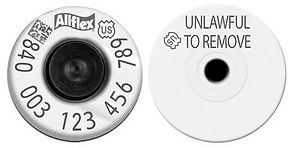
The Department of Agriculture provides each farm with a certain number of white button-style official RFID tags made by Allflex, like the one pictured in the photo above. You can purchase more of these tags yourself for around $3.15 each. There are two downsides to these tags; they are bulky and they have a tendency to catch on fences easily, sometimes causing a ripped ear.
Another RFID tag option are these Shearwell tags, like in this photo. These tags are smaller and less intrusive/visible than the button style tags. They are much harder to catch on fences and rip the ear. These tags come in a variety of colors, but the brown option almost disappears on an adult deer. These tags are $1.18 each.